 Daniel Thornton
Key Takeaways
- A Château range's size (90 through 165) does not directly change repair pricing — the same parts and labor apply regardless of width.
- A gas valve or thermocouple fault starts from $225, and a control board or display failure starts from $395, on any size in the family.
- More burners on a larger range mean more components that could eventually need service, not a higher cost per repair.
- Installation specifics — clearance, gas run length, ventilation — affect labor more than the range's stated size does.
- The Château 75 repair-or-replace guide's pricing logic carries across every width in the family.
The Bottom Line
Repair pricing on a Le Château range depends on which component failed, not on whether the range is a 90 or a 165 — the same gas valve, sensor, and board pricing applies across the whole size family.
Le Château comes in a range of widths — 75, 90, 120, 150, and 165 centimeters among them — and the size of the range you own changes almost nothing about what a repair costs. That surprises most owners, who assume a 165 spanning five or six burners must cost proportionally more to service than a compact 90. Anyone comparing Le Château range repair cost by size is really asking one question: does a bigger range cost more to fix? This guide breaks down what actually drives Château repair pricing across the size range, using this site's own service pricing rather than a guess.
| Repair | What it addresses | Starting price |
|---|---|---|
| Gas valve / thermocouple fault | Burner will not stay lit | from $225 |
| Sensor / control board calibration | Temperature reading is off | from $195 |
| Door lock service | Self-clean lock stuck mid-cycle | from $295 |
| Spark module replacement | Moisture in the ignition circuit | from $225 |
| Gas combustion service | Pressure or air shutter issue | from $195 |
| Board or display replacement | Control board or display failure | from $395 |
How Much Does La Cornue Château Repair Cost?
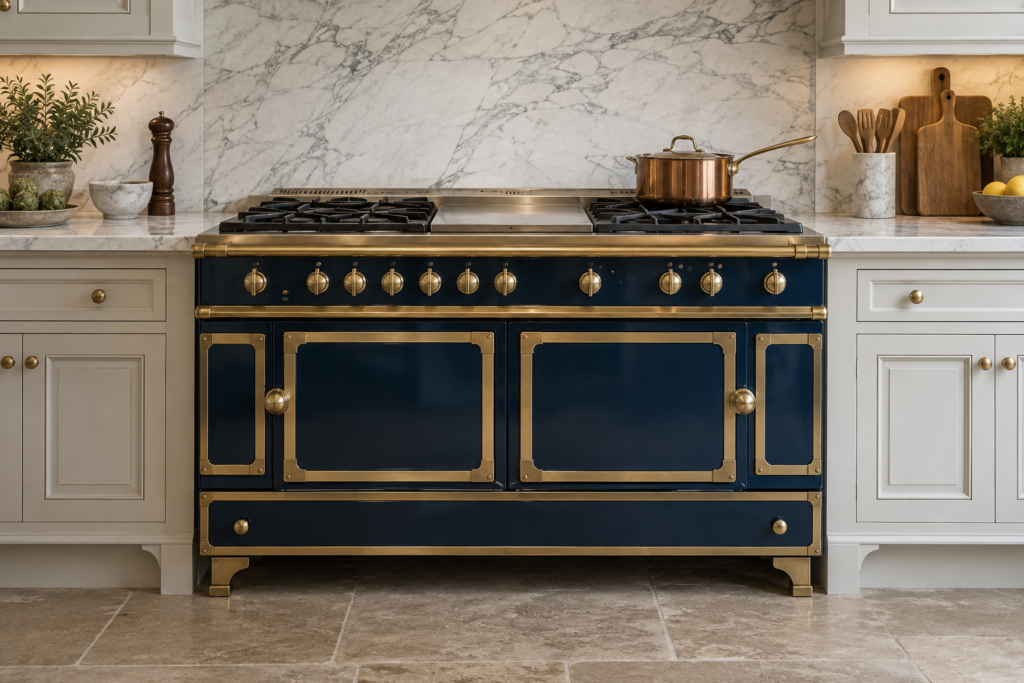
No, not directly. A gas valve, a thermocouple, an ignition module, or a control board are the same parts regardless of whether they sit on a 90-centimeter Château or a 165, and the labor to access and replace them does not scale meaningfully with the range's width. What does vary by size is the number of burners, which affects how many individual components exist on the range — a 165 simply has more burners that could, in principle, need attention over its lifetime, not a higher cost per repair.
What Actually Drives the Cost of a Repair
The failed component, not the range's dimensions. A gas valve or thermocouple fault starts from $225 whether it is burner one of four or burner one of six. A control board or display failure starts from $395 regardless of size, because it is the same board architecture across the range family. The real cost driver is which system failed — ignition, sensing, gas supply, or the control board — and how accessible that system is on the specific range, which has more to do with installation details than with overall width.
Are Larger Ranges More Mechanically Complex?
Somewhat, in that a 165 has more burners and potentially a wider oven cavity, but the added complexity is additive rather than multiplicative — more of the same components, not fundamentally different ones. A technician servicing a burner-specific fault on a 165 is doing the identical job they would do on a 90; they are simply choosing among more burners to identify which one is affected. The oven itself, the control board, and the ignition system are shared architecture across the sizes in this family.
- More burners means more individual jets and igniters that could eventually need service, not higher cost per repair.
- A wider oven cavity on larger models does not change sensor or heating element pricing.
- The control board and display are shared architecture across sizes, so board-level repairs price the same regardless of width.
- Installation specifics — clearance, ventilation routing — affect labor more than the range's stated size does.
- Brass hardware and knobs are sized differently across the range but priced as the same category of cosmetic repair regardless of size.
- Self-clean lock mechanisms use the same door-lock hardware family across sizes, priced from $295 either way.
What Should You Actually Expect to Pay?
Whatever tier on the table above matches the actual failed component, independent of which Château size you own. A burner that will not stay lit is a from $225 gas valve or thermocouple job on any size in the family. A range that will not hold accurate oven temperature is a from $195 sensor or calibration job. The size of your range is useful information for a technician mainly for parts identification and installation context, not for estimating price.
- Identify the actual symptom — ignition, temperature accuracy, door lock, or display — rather than starting from the range's size.
- Match it to the table above for a realistic starting price.
- Confirm the exact model and size when booking, since it affects parts ordering, not the price tier itself.
- Ask for a written estimate before any work begins, regardless of which size range you have.
- Compare the estimate against the table above to confirm it matches the expected tier for the symptom described.
For a specific size not broken out separately on this site, this same table applies directly — the Château 75 repair or replace guide covers the smallest size in the family in more depth, and the logic carries across every width. General upkeep that reduces how often any of these repairs come up is covered in La Cornue range maintenance, and book range repair once you know which symptom applies, or schedule a visit directly.
Installation Differences Matter More Than Size
A range installed with tight clearances, a longer gas run, or ventilation that was not sized correctly for its output can add labor regardless of whether it is a 90 or a 165 — that variability has far more to do with how the specific kitchen was built around the range than with the model number on the rating plate. Two owners with the same size range can see different labor times on the same repair simply because one installation is easier to access than the other.
This is worth mentioning specifically when comparing notes with another Château owner or researching a repair online — a quoted price that seems unusually high or low for the same symptom often traces back to installation access rather than the range's size or age. When in doubt, the most reliable number is always the one confirmed for your specific range after a technician has actually seen it, not a figure carried over from someone else's kitchen.
Does an Older Château Cost More to Repair?
Age affects parts availability more than it affects the base price tier. A Château that is decades old may need a part sourced rather than pulled from a common stock item, which can add time to a repair but does not change the starting price for the repair category itself — a gas valve fault is still priced as a gas valve fault, whether the range is five years old or fifty. What does change with age is the likelihood that more than one system needs attention in the same visit, simply because more time has passed since the last service.
- Parts sourcing can take longer on an older range without changing the repair category's price tier.
- Multiple issues in one visit become more likely with age, which is a scheduling factor rather than a pricing surprise.
An appliance diagnostics visit is the same starting point regardless of the range's age or size, and it is the only way to know which tier on the table above actually applies to your unit. If cosmetic wear on knobs or trim is part of what prompted the question, La Cornue knobs and trim covers that separately from the mechanical repairs on this page.