 Daniel Thornton
Key Takeaways
- A CornuFé 110 is two appliances in one cabinet, and gas-side faults and oven-side faults sit at completely different price points.
- The oven temperature sensor and the control board produce the same symptom, which is why a diagnosis comes before a part order.
- On the dual-fuel platform F1 is an open oven temperature sensor; on a gas Château range F1 is an oven igniter failure, and the two must not be read from the same list.
- Whether the part is current or legacy, and whether the range has to be pulled from its opening, moves the cost more than the fault itself.
- A diagnostic visit starts from $165 and buys a decision, with the final price confirmed on site and a written estimate before any work begins.
The Bottom Line
Identify which half of the range failed before spending anything: a burner electrode and a relay board are not the same repair. A diagnostic visit starts from $165, and the final price is confirmed after the on-site diagnosis with a written estimate first.
The CornuFé is the series most American owners actually live with: a dual-fuel range with gas burners on top and an electric oven below, built in the same French workshop tradition as the bespoke models but sold in fixed widths. The 110 cm version is the one that turns up most often in a working family kitchen, and CornuFé 110 repair cost is the question owners ask before they ask anything else. The honest answer is that it depends far less on the badge than people expect, and far more on which half of the appliance failed.
| What failed | What you notice | Service starts from |
|---|---|---|
| Oven temperature sensor (RTD) | Oven runs hot or cold, or posts a sensor code | from $195 |
| Bake element | Oven will not reach temperature | from $195 |
| Relay board | Element never switches, or never switches off | from $395 |
| Spark module | No burner on the cooktop will light | from $225 |
| Single burner electrode | One burner clicks without lighting | from $155 |
| Gas combustion service | Yellow, lazy, or uneven flame | from $195 |
| Diagnostic visit | You do not yet know which of the above | from $165 |
You Own Two Appliances in One Cabinet
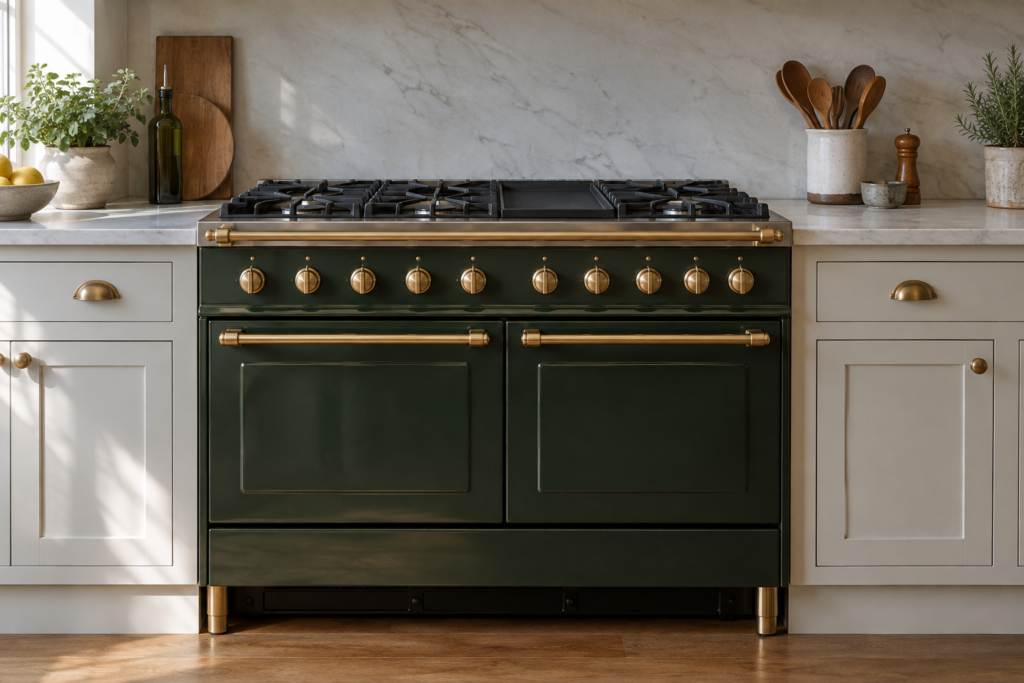
A dual-fuel range is a gas cooktop and an electric oven sharing a frame, a control panel, and nothing else that matters. The failures do not overlap, and neither do the costs. Gas-side faults are mechanical and comparatively cheap: an electrode, a spark module, a burner cap seated wrong. Oven-side faults are electrical, and the spread runs from a sensor to a board.
This is why a single number for the range as a whole is misleading. La Cornue range repair starts from $245 for the common cases, but the part in question decides everything after that, and the final price is confirmed after the on-site diagnosis with a written estimate before any work begins.
The Sensor and the Board Feel Identical to You
The single most expensive misdiagnosis on this platform is treating a board fault as a sensor fault or the reverse. Both make the oven miss its setpoint. Both can post a code. Only one of them is an inexpensive part.
On the dual-fuel platform, F1 is an open oven temperature sensor and F2 is that same sensor shorted, while F5 is a control board failure. That ordering is worth committing to memory, because it is not universal across La Cornue platforms.
🔴 On a gas Château range, F1 is not a sensor at all: it is an oven igniter failure. The same character on the display means a different part on a different platform, and an owner who reads a generic code list instead of the code page for their own appliance can easily buy the wrong part. Check the code against the appliance type you actually own.
The Gas Side Is Cheaper Than Owners Fear
Burner complaints account for most of the calls about this range, and most of them resolve at the low end of the table above. A single burner that clicks without catching is almost always its own electrode or a cap sitting a fraction out of place after cleaning. When no burner on the cooktop will light, the shared spark module is the suspect rather than six electrodes failing at once, and that distinction is something a technician confirms in minutes.
Flame quality is the other common report. A yellow or lazy flame on a range that used to burn clean and blue is not a part failure so much as a combustion setting drifting out of specification, and gas combustion service addresses the burner ports, the air shutter, and the manifold pressure together. It matters more than aesthetics: a badly burning flame puts more combustion products into the kitchen and loads the hood above it.
What Actually Drives the Bill
Three things move a CornuFé service cost more than the fault itself does.
- Whether the part is current or legacy. Parts for current platforms are normally stocked. Anything for an older configuration may be a special order, and our guide to La Cornue parts and lead times explains what that does to a schedule.
- Whether the range has to come out. Work reachable from the front is a different job from one that needs the range pulled forward, disconnected, and reset into a tight cabinetry opening.
- Whether one visit is enough. A diagnostic that identifies a stocked part usually finishes the same day. A special-order part means a second visit, and honest scheduling is better than an optimistic promise.
Parts service visits that include the part start from $215, and a diagnostic visit starts from $165 and tells you which of the three situations you are in before you commit to anything.
Two Ways Owners Make It More Expensive
The first is buying parts online before a diagnosis. A sensor ordered on the strength of a symptom is money spent on a guess, and on this appliance the sensor and the board produce the same symptom. The second is running the range with a known fault because it still mostly works. An oven that overshoots its setpoint is stressing the same board you are hoping not to replace, and a burner that lights on the third click is putting unburned gas into the room every time it does.
- Record the exact code and which appliance type it came from, gas or dual fuel.
- Note the behavior without the code — cold oven, overshooting oven, one burner, all burners.
- Stop using the affected half if there is any gas smell, any scorching, or any burning odor from the oven.
- Get the diagnosis before the part. The visit fee buys a decision, not just a label.
Booking the Visit
Our La Cornue range repair service covers both halves of the CornuFé platform, the gas surface and the electric oven, and technicians who work on these ranges know where the dual-fuel architecture creates failure modes that neither a pure gas range nor a pure electric one produces.
Every quote follows the same rule: the final price is confirmed after the on-site diagnosis, and you receive a written estimate before any work begins. Book a diagnostic visit, or tell us the code and the symptom and we will tell you what is likely and what it is likely to involve.